Service
Garage Door Spring Repair
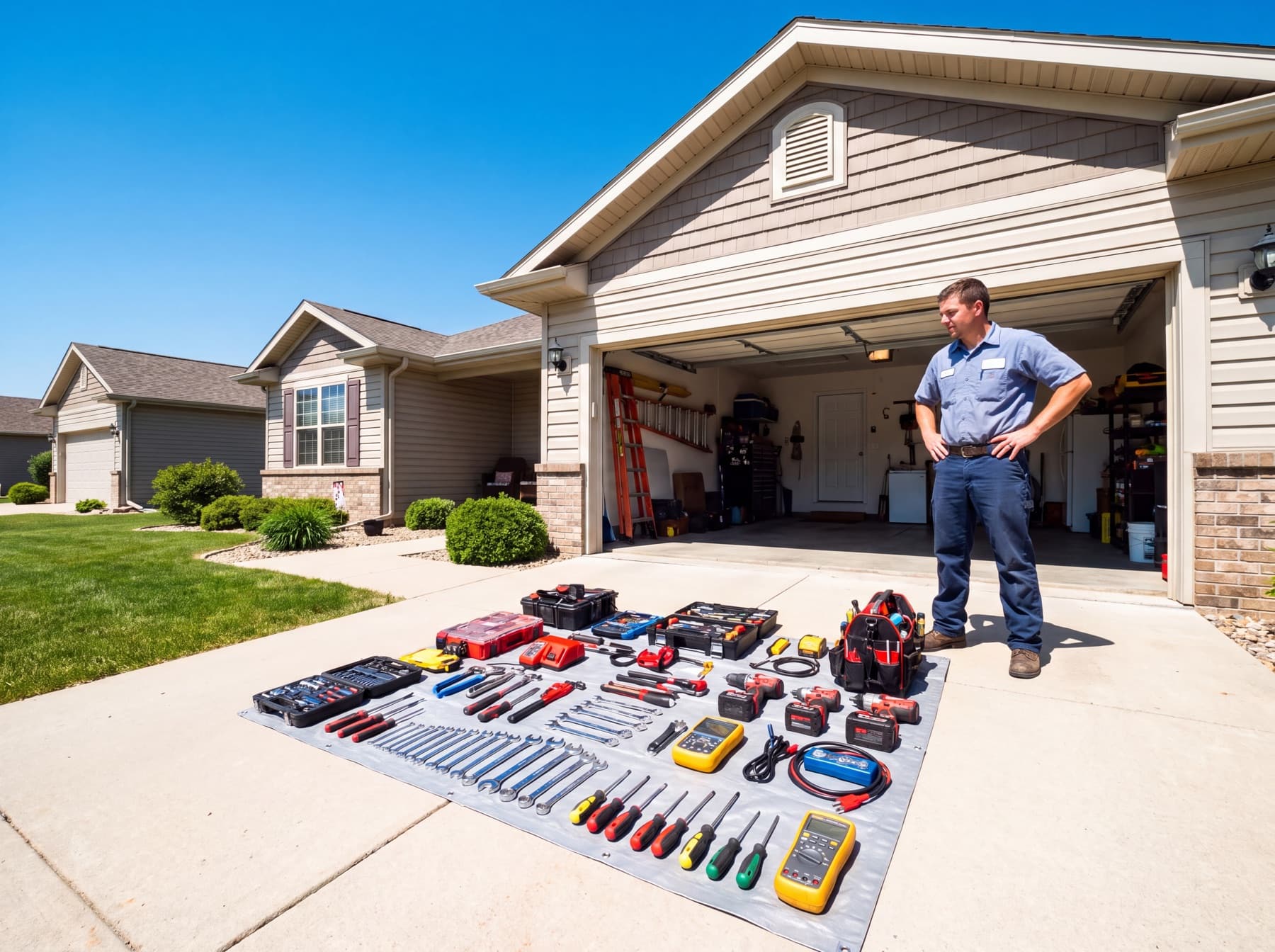
Torsion and extension spring repair and replacement, correctly tensioned for your door's exact size and weight using the right tools for the job. A broken spring is one of the most common — and most dangerous to DIY — garage door failures, so we handle it safely, often same-day.
The opener gets the credit, but it's the springs doing the actual work of lifting a garage door — which is why a failed spring is both one of the most common calls we take and one of the least safe to tackle without the right training and tools.
What Spring Replacement Costs
Replacing a full pair of springs typically runs $300 to $540 installed, while a single spring on its own usually costs $150 to $350. The spring type is the biggest factor:
| Spring type | Typical cost per spring |
|---|---|
| Extension spring | $120 – $200 |
| Torsion spring | $150 – $350 |
Torsion springs run higher mostly because of the labor involved, not the part itself — they need to be wound to precise tension by someone who knows what they're doing. Since both springs in a pair take on roughly the same wear over time, most technicians recommend replacing them together even when only one has actually failed — the other is usually not far behind it.
Key takeaway
Expect $300–$540 to replace a full pair, with torsion springs running higher than extension springs. A recommendation to replace both when only one broke isn't an upsell — it reflects how evenly a matched pair actually wears.
How Long Springs Actually Hold Up
Garage door springs typically last 7 to 10 years, or around 10,000 open-close cycles — though how often the door gets used matters more than the calendar date. Torsion springs are rated for 10,000 to 15,000 cycles, roughly 7 to 10 years at normal use, stretching to 14 years if the door only cycles once a day. Extension springs wear out sooner on average, typically around 7 years regardless of usage.
A few signs point to a spring nearing failure, not just needing routine attention:
- Loud popping, grinding, or squeaking as the door moves
- A visible gap between coils on a torsion spring, or a stretched-looking extension spring
- The door feels noticeably heavy when you lift it by hand
- The door drops fast or slams instead of lowering smoothly
- Rust or visible corrosion on the spring itself
Lubrication and periodic inspection can stretch a spring's usable life somewhat, but they don't stop eventual failure — springs are a wear part, not something maintenance keeps running forever. Replacing one proactively, before it snaps, is both safer and typically cheaper than an emergency call after it already has.
Where We Offer Garage Door Spring Repair
What Homeowners Look For
A few things customers consistently tell us matter most.
Frequently Asked Questions
Ready to get this fixed?
Call now or request a free estimate — we'll get back to you fast.