Service
Garage Door Installation
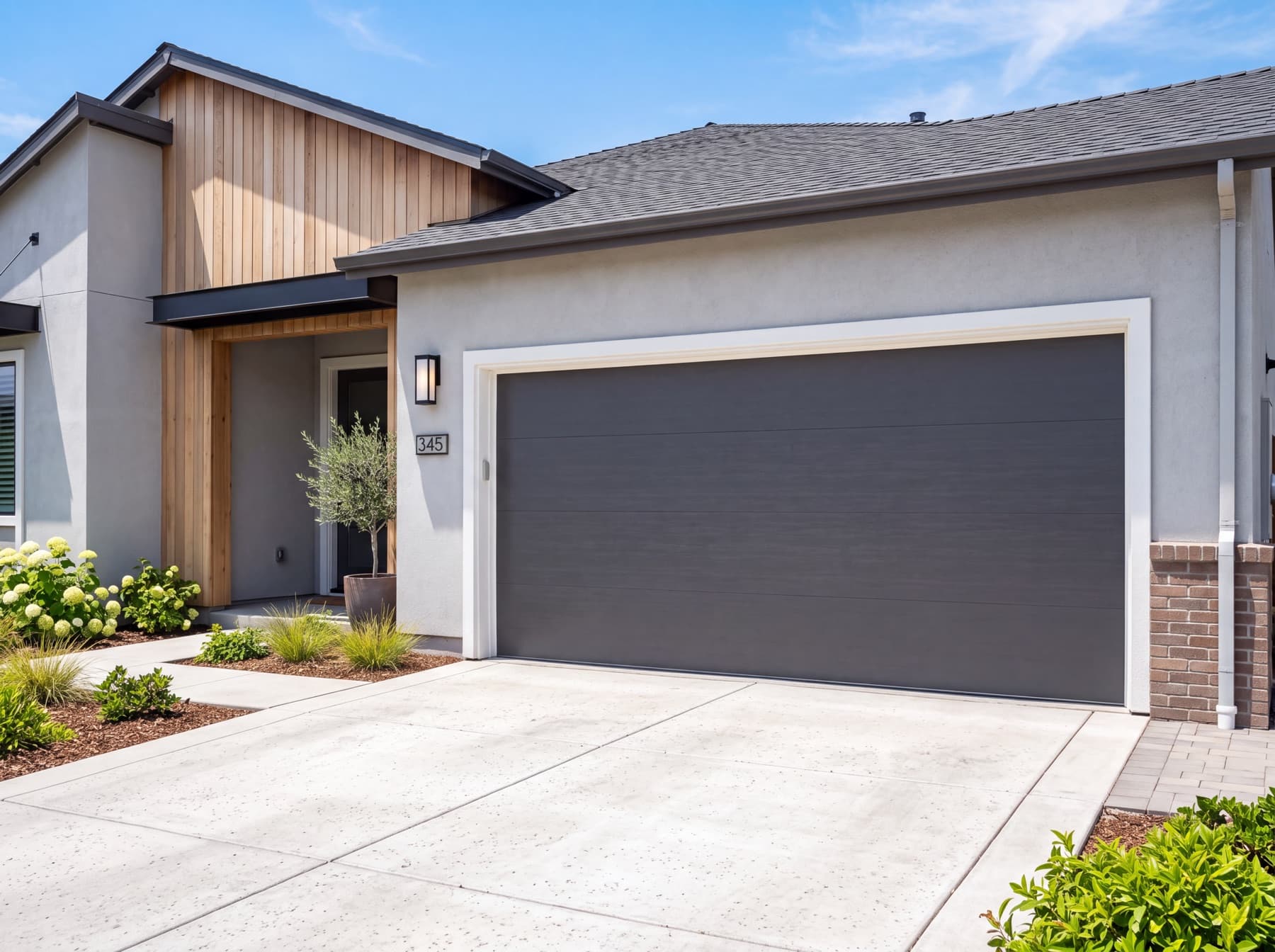
Full garage door installation sized to your home's actual opening and style, not a default swap. We handle complete door replacements, insulated and non-insulated options, and new installs for additions or renovated garages throughout the Triad.
When homeowners call about a new garage door, the conversation almost always comes down to two things: what the total will run, and whether the opener that comes with it is actually strong enough for the door. Both questions trace back to the same starting point — the size and weight of the door itself.
The Real Cost of a New Garage Door
With the door, a new opener, and professional installation all included, most projects total $1,500 to $3,350. Size sets the floor: single-car doors average $2,171 (usually $844 to $3,498), and double-car doors average $3,478 (usually $2,435 to $4,522).
Material narrows or widens that range further:
| Material | Typical cost range |
|---|---|
| Steel | $800 – $2,500 |
| Aluminum / glass | $1,200 – $4,000 |
| Wood | $1,500 – $5,000 |
| Custom / oversized / carriage-style | $3,000+ |
Add $200 to $600 for installation labor, and $250 to $500 more if a new opener is part of the job. Insulated doors (R-6 to R-18) cost a bit more up front, but they're worth it for anyone using the garage as workspace through Piedmont Triad winters or hot summer stretches.
Key takeaway
A standard single-car door with a new opener should land in the $1,500–$3,350 range. Double-car, wood, or custom doors climb from there — size and material are what actually separate a low quote from a high one, more than the installer you pick.
Getting the Opener Size Right
An opener needs enough horsepower for the specific door it's lifting — not just whatever model is cheapest that week. A single, lightweight steel door is fine with 1/2 to 1/3 HP. Once you're dealing with a double-car or insulated door — roughly 200 lbs or more — 3/4 HP is the safer call for smooth, consistent operation. Wood carriage doors and oversized custom units typically need a full 1 HP chain-drive opener to handle the load.
Drive type is its own decision, separate from horsepower:
- Chain drive — the most durable and least expensive choice, though also the loudest.
- Belt drive — trades the metal chain for a rubber belt, running much quieter — a good fit if the garage backs up to a bedroom.
- Screw drive — a threaded-rod design that sits in between: quieter than chain, lower-maintenance than belt.
Undersizing the opener for a heavy door burns it out early; oversizing it for a light door doesn't do the hardware any favors either. Matching horsepower to the actual door is what keeps the whole system running smoothly for years.
What a Professional Install Covers
A full installation includes removing and disposing of the old door, mounting correctly sized tracks and hardware, hanging and balancing the new panels, and installing and testing the opener — including the safety reversal sensors required by federal regulation. A simple single-door swap is typically a one-day job; installs that also need track, header, or opening adjustments can stretch to a second day. Getting the balance and sensors right from the start is what keeps a new door from turning into a service call a few weeks later.
Where We Offer Garage Door Installation
What Homeowners Look For
A few things customers consistently tell us matter most.
Frequently Asked Questions
Ready to get this fixed?
Call now or request a free estimate — we'll get back to you fast.